| |
|
 |
|
|
|
| |
Information and reservations: |
| |
Phone:
+34 972 980980 |
| |
Email:
info@roses.net |
|
|
|
|
| |
|
|
 |
|
|
|
Roses is an active town all year long.
It offers activities and entertainment
for all kinds of travelers. |
|
|
|
|
|
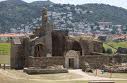 |
The Citadel |
|
A walk
around the Citadel is essential for anyone
visiting Roses. Declared a
historical-artistic complex in 1961, the
Citadel contains relics of various periods
and occupation times. The military
fortification, with its monumental Sea Gate,
is a Renaissance-style enclosure of 131.480
m2 built in 1543.
●
More information |
|
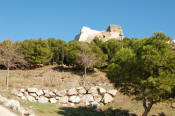 |
The Trinity
Castle
|
|
The Trinity Castle crowns the Poncella point above the Roses lighthouse. This military construction, which dates from 1544, was erected under the reign of Emperor Charles V.
●
More information |
|
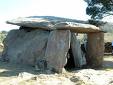 |
The
Megalithic
complex
|
|
Inhabited
since remote
times, Roses
possesses
one of the
most
complete and
impressive
megalithic
itineraries
of the Costa
Brava.
●
More
information |
|
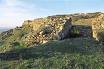 |
The Visigoth
Fortress
|
This is a fortress dating
from the mid-seventh
century, situated in the
present Puig Rom estate. It
has
an
oval
floor
plan,
with
two
practically
parallel
walls.
●
More
information
|
|
 |
The Bufalaranya
Castle
|
This castle
stands on a hill close to
the road from Roses to Cadaqués. Built in the 10th
C., the Castle of
Bufalaranya has the singular
characteristic of the opus
spicatum design formed by
its flagstones.
●
More information
|
|
|
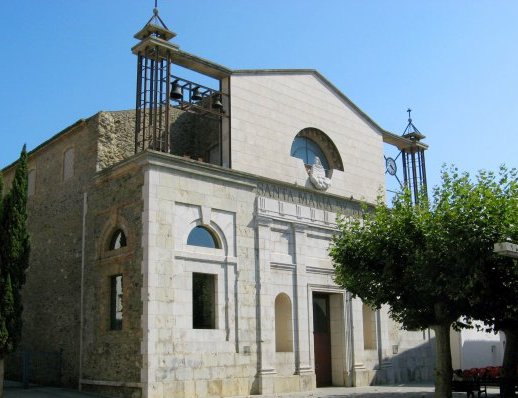
The Santa María's Church |
The old
church was
built in
1796, and
from it the
apse,
transept and
cupola are
preserved.
The rest of
the nave,
the side
chapels and
the façade
are
neo-classical
works from
the year
1853 by the
architect
Martí Sureda
i Deulovol.
● More informaction
|
|
|
The Mallol House |
| This modernist building in the Plaça de Catalunya (Catalonia Square) dates from 1906 and was designed by the architect Joan Marès. It is now the siege of the Town Hall.
●
More information |
|
|
|
|
|
|
-
- hotel costa brava, hotels costa brava,
hotel
roses, location costa brava, hotel rosas, locations
costa brava, hotels costa brava, hotels costa brava,
hotels roses, apartment costa brava, hotels roses,
holidays costa brava, rentals apartments costa
brava, apartments roses, hotels rosas
|
|


